Applied Computational Neuroscience

Projects

A chronological record of our programmes, with funding scope and research team visible on every entry.

Spain flag National

BRAINMOVE - Neural Sensorimotor Modelling for Adaptive Movement Control

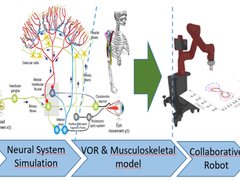
BRAINMOVE is a Spanish national research project funded by MICIU/AEI/10.13039/501100011033 and by FEDER, UE. The project investigates how the cerebellum, the basal ganglia and the hippocampus jointly support efficient, adaptive and safe motor control, and how these principles can be translated into machine-learning controllers for collaborative robots with complex, compliant dynamics.

Spain flag National

Deciphering Essential Tremor: Computational Exploration of Inferior Olive Dynamics in Cerebellar Networks: TREMBLE-ICED

Essential Tremor (ET) is a widespread neurological condition that is characterised by involuntary shaking that primarily affects the hands but it also extends to also impact visual stability. These tremors pass often unnoticed in their subtler forms, and they become recognisable as ET only when they manifest prominently. ET presents distinct challenges in motor control and visual coordination, especially in older individuals but note however that it should not be confused with Parkinson’s disease. Whilst the precise cause of ET remains elusive, there is a growing research that indicates a significant role played by the inferior olive (IO) and more specifically its rhythmic neural activity. As an integral part of the cerebellar system, this IO’s rhythmic neural activity that ultimately coordinates the cerebellar motor signals that drive motor coordination is relevant to understanding the ET is suggested as a potential driver for ET.

ResponsibleNiceto R. Luque
Spain flag National

MUSCLEBOT - Adding muscles to a cobot in human robot interaction

The MUSCLEBOT project is a national Spanish project funded by the Spanish National Research Agency MUSCLEBOT(CNS2022-135243) funded by “MCIN/AEI/10.13039/501100011033” and by the European Union “NextGenerationEU/PRTR”. MUSCLEBOT tries to benefit from decades of neuroscience studies about the spino-cerebellar structure and functioning, and apply those findings to the current HRI robotic challenge. Here we address this challenge by adding a muscle model to cobot equipped with series elastic actuators, i.e., Baxter, Sawyer or Panda cobots, and performing spino-cerebellar control able to learn different stiffness profiles which ultimately will improve HRI.

ResponsibleNiceto R. Luque
Spain flag National

SENSCOMP - Simulation of the neural computational substrate in the sensorimotor system. Adaptation mechanisms and their integration in experimental platforms

SENSCOMP is a Spanish national research project funded by MICIU/AEI/10.13039/501100011033 and by FEDER, UE. The project investigates how the cerebellum and the basal ganglia achieve efficient and precise control through their internal adaptation mechanisms, and integrates the resulting models into neural-simulation and neurorobotics platforms.

Spain flag National

DLROB - Deep Learning for accurate movement of collaborative robotics

The DLROB project is a national Spanish project funded by the Spanish National Research Agency DLROB (TED2021-630 131294B-I00) funded by MCIN/AEI/ 10.13039/501100011033 and by European Union NextGenerationEU/PRTR. Niceto R. Luque is Principal Investigator and Richard R. Carrillo is Co-Principal Investigator. This project focuses on proposing a cobot dynamic modelling methodology and subsequent cobot control that are to be learnt rather than calculated, i.e., data-driven vs. equation-driven modelling and control.

ResponsibleNiceto R. Luque
Research membersRíchard R. Carrillo
European Union flag European

HBP - Human Brain Project

The HBP is a European flagship initiative aiming to build a research infrastructure to help advance neuroscience, medicine and computing based on brain computational modelling. Our group is included as part of the Neurorobotics Subproject (SP10), with Jesús Garrido Alcázar and Niceto R. Luque in the research team.

ResponsibleEduardo Ros
Spain flag National

CEREBROT - Adaptive Cerebellum for Sensori-Motor Integration and its Application in Robotics

Perceiving and understanding the environment and being able to efficiently interact with it dynamically is critical for next generation of robots. The human brain is capable of processing and integrating a masive amount of hetereogeneous sensory data, both from external sources (sensory system) as from internal sources (as feedback from previously stored internal representations). Thus, the human brain is a very good reference that performs closed-loop perception-action processing tasks intensively through a highly specialized neuronal structure.

ResponsibleEduardo Ros
European Union flag European

REALNET - Realistic Real-Time Networks. Computation Dynamics in the Cerebellum

The REALNET project is a FET Proactive initiative aiming to build the first realistic cerebellar model that can run in real-time and be used for controlling robotic systems. Our group develops the software simulation tool (EDLUT) and the simplified (spiking point neurons) model of the cerebellum, with Jesús Garrido Alcázar and Niceto R. Luque in the research team.

ResponsibleEduardo Ros